Follow Dr. Matsen's Shoulder Arthritis blog
On which we try to provide the best and most current information on shoulder arthritis.
Sjogren's syndrome is a chronic autoimmune disorder in which immune cells attack and destroy the glands that produce tears and saliva. The hallmark symptoms of the disorder are dry mouth and dry eyes. It is named after the Swedish eye doctor, Dr. Henrik Sjogren, who first described it.
Sjogren's syndrome can occur in two ways: primary and secondary. Both forms affect roughly an equal number of people.
Primary Sjogren's syndrome occurs by itself and is not associated with other diseases.
Secondary Sjogren's syndrome occurs with rheumatic diseases such as rheumatoid arthritis, systemic lupus erythematosus ("lupus"), polymyositis and some forms of scleroderma. Rheumatic diseases are conditions that affect joints bones muscles skin and sometimes other organs.
Fertility and pregnancy
A certain blood marker often found in women with Sjogren's syndrome can very rarely be associated with heart problems in newborn babies. If you're a woman with Sjogren's syndrome who is planning to become pregnant, see your doctor about testing for this marker. If it is present ask your doctor whether pregnancy is advisable. If you do become pregnant you and your doctor can work out the best plan to manage the situation.
Incidence
Sjogren's syndrome can affect people of any race and any age. It usually affects women. It affects more than one million people in the U.S.
Symptoms
Sjogren's syndrome affects everyone differently. You may not have every symptom listed here and you may have only minor problems with those you do have. The symptoms may seem worse at some times than at others.
In people with no other health problems the most common early symptom is the onset of severe dry mouth and eyes.
In people with rheumatoid arthritis or related conditions dry eyes and mouth develop more slowly. In this case Sjogren's may be difficult to diagnose.
Symptoms may include:
Dry mouth
The mouth normally contains saliva which aids chewing and swallowing. In people with Sjogren's syndrome the amount of saliva is much less. This makes chewing swallowing and speaking difficult. It may also cause a decreased sense of taste.
Dry eyes
Your eyes may feel dry "gritty or sandy." They may burn and look red. A thick substance may accumulate in the inner corner of your eyes while you sleep. Your eyes may be more sensitive to sunlight. If not properly treated Sjogren's syndrome can lead to ulcers of the cornea (the clear covering of the eyeball). On rare occasions this can cause blindness.
Swollen salivary glands
There are three set of glands that produce saliva. They're located under your tongue in the cheeks in front of your ears and in the back of your mouth. They may feel swollen and tender (see figure 2). This may occur along with a fever. This affects about one-half of people with the disorder.
Dental cavities
This is a common problem that results from a dry mouth. Saliva fights bacteria and defends against cavities. Because you have decreased saliva your teeth may develop cavities more easily. Dry nose throat and lungs This may make your throat feel dry and tickly. You may have a dry cough hoarseness a decreased sense of smell and nosebleeds. It can also lead to pneumonia bronchitis and ear problems. Dryness of the vagina This can cause painful intercourse for women with Sjogren's syndrome.
Fatigue
Fatigue is a common complaint. You may get easily exhausted and feel tired and worn out. Other problems Sjogren's syndrome can affect other parts of the body such as blood vessels the nervous system muscles skin and other organs. This can lead to muscle weakness confusion and memory problems dry skin and feelings of numbness and tingling.
Sjogren's syndrome can also affect the liver and pancreas. When it does there is a greater chance for developing cancer of the lymph tissue. Although this is unusual it is one reason why medical exams and continued follow-up are important.
Click to enlarge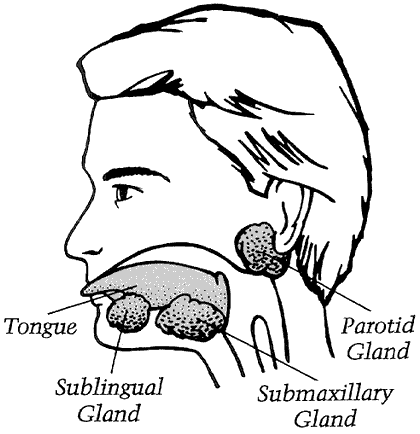
may become swollen
Causes
The causes of Sjogren's syndrome are not known. There is some evidence that viral infections heredity and hormones may in some way contribute to Sjogren's syndrome.
Effects
In Sjogren's syndrome changes occur in the immune system--the body's defense against disease. In Sjogren's the immune system lacks the usual controls. This causes white blood cells to invade glands in the body that produce moisture such as the tear and salivary glands and the Bartholins glands in the vagina. They can destroy the glands and cause them to stop producing moisture.
Sjogren's syndrome can also cause problems in other parts of the body including the joints lungs muscles kidneys nerves thyroid gland liver pancreas stomach and brain (see figure 1). In addition Sjogren's syndrome may cause skin nose and vaginal dryness and may affect other organs of the body including the kidneys blood vessels and lungs. Blindness is a rare complication of Sjogren's.
Click to enlarge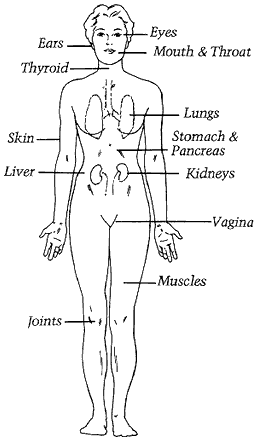
may be affected
by Sjogren's syndrome
Diagnosis
Your doctor may do several things to find out if you have Sjogren's syndrome. Some of the tests you may undergo include:
Physical examination
Your doctor will ask you to describe your symptoms and will look for other symptoms such as red itchy eyes; swollen salivary glands; a dry cracked tongue; and enlarged lymph glands in your neck.
Blood tests
Tests for specific blood markers can determine if you have Sjogren's syndrome. However not everyone with Sjogren's has these markers.
Diagnostic tests
Schirmer test
This helps determine how dry your eyes may be. It involves placing a small piece of filter paper under the lower eyelid to measure the amount of tears your eyes produce.
Slit-lamp examination
his is a more accurate way to find out if your eyes are dry. In this test the doctor puts a drop of dye into your eye and examines the eye with a special instrument called a slit lamp. The dye will stain dry or eroded areas of the eye. This test is often done by an ophthalmologist (eye doctor}.
Lip biopsy
In this test the doctor removes a few salivary glands from inside your lip. The tissue is examined under a microscope. The appearance of the tissue helps determine if you have Sjogren's syndrome.
Salivary function tests
These measure the actual amount of saliva you produce to help determine if you have Sjogren's.
Urine tests
These may be done to test your kidney function.
Chest X-ray
This can help detect changes in your lungs.
Treatment
As yet there is no cure for Sjogren's syndrome. However, proper treatment can help relieve symptoms so you can live a comfortable and productive life.
The main goal of treatment is to relieve discomfort and lessen the effects of the dryness. Since Sjogren's syndrome affects everyone differently your treatment plan will be based on your specific needs.
See your family doctor and your dentist regularly. Since Sjogren's syndrome can affect many parts of the body regular checkups can help detect and prevent future problems. You may also need regular check ups with an arthritis specialist) and an eye specialist. If you have Sjogren's syndrome and a rheumatic disease make sure you follow your doctor's complete treatment program.
Self-management
Your treatment may include different ways to relieve your symptoms such as those listed below. If you have arthritis or another condition you will also want to follow specific treatment for that condition.
For dry mouth:
- Sip fluids throughout the day.
- Use sugar-free gum or candies to stimulate saliva production.
- Try saliva substitutes or mouth coating products. They may be useful in some people and are available without a prescription.
To prevent dental cavities:
- Have frequent dental checkups.
- Use mouth rinses that contain fluoride.
- Brush and floss your teeth regularly.
- Use sugar-free products.
For dry eyes:
- Use artificial tears or eye drops to help relieve the discomfort of dry eyes. Use preservative-free products if you apply the drops more than four times per day.
- Try lubricating ointments or small long-acting pellets for overnight or long-lasting relief.
- Your ophthalmologist may recommend a simple operation that blocks tear drainage from your eye.
For dry skin:
- Use moisturizing lotions for sensitive skin.
- Avoid drafts from air conditioners heaters and radiators when
- possible.
- Use a humidifier in your house and at work.
For vaginal dryness:
- Use lubricants made specifically to help vaginal dryness. Do not use petroleum jelly.
Exercise and therapy
Mild exercise such as walking or swimming can help keep joints and muscles flexible. Exercise may also protect against further joint damage.
Medications
Aspirin and nonsteroidal anti-inflammatory drugs (NSAIDs) help reduce joint swelling and stiffness as well as muscle aches.
If you have serious complications your doctor may recommend stronger medicines.
Resources
Contact the following organization for more information.
Sjogren's Syndrome Foundation
www.sjogrens.org
The Sjogren's Syndrome Foundation is an international organization that provides materials educational programs and support groups throughout the U.S. and abroad.
Credits
Some of this material may also be available in an Arthritis Foundation brochure.
Adapted from the pamphlet originally prepared for the Arthritis Foundation by Mitchell Friedlaender M.D., Elaine Harris, Paul F. Howard M.D., James Sciubba M.D., John P. Tesser M.D. and Norman Tallal M.D. This material is protected by copyright.


