|
Many approaches to treating juvenile arthritis are available.
The goals of treatment for juvenile rheumatoid arthritis are to:
- control inflammation
- relieve pain
- prevent or control joint damage
- maximize functional abilities
To reach these goals the treatment program usually includes:
- medications
- exercise
- eye care
- dental care
- healthy diet
Other types of treatment such as surgery may be necessary. Some physicians have also found that pain can be lessened by combining medical treatment with techniques such as progressive muscle relaxation meditative breathing and guided imagery.
Health care team
Your child's health care team may include different specialists who work together to offer your child a complete treatment program. Pediatric arthritis centers found in many major medical centers offer this care in one location. If you do not live near such a center your child's physician will refer you to the specialists she needs.
Your child's regular doctor
Works with your child's pediatric rheumatology team to help your child. If you do not live near a pediatric rheumatology center this doctor can consult by telephone with the nearest center. The doctor who already knows your child's medical history is usually the best person to see first. This doctor can work with general medical problems such as colds or normal childhood ailments.
A doctor who specializes in childhood arthritis
If you live near a pediatric arthritis center your regular doctor may refer you for a consultation or for continuous care. Board certification of pediatric arthritis specialists began in 1992. If there is no Board-eligible or certified pediatric arthritis specialist in your area your doctor may refer you to an adult arthritis specialist with experience and some training in the care of children.
Nurse
Often serves as the link between the patient the physician the school and other members of the health team to coordinate care. Provides additional education about JRA its treatment and resources.
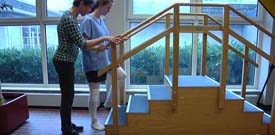
Physical therapist
Helps with mobility problems. Measures joint motion and strength and prescribes special exercises leg splints shoes or other assistive devices to make walking and moving easier.
Occupational therapist
Helps with hand and arm function. Measures arm motion and strength and prescribes special exercises hand splints or other assistive devices to help with daily living skills such as dressing bathing or writing.
Medical social worker
Helps with the personal emotional family or financial problems which may occur with any chronic disease.
Ophthalmologist
Checks for signs of eye problems and treats eye disease.
Pharmacist
Answers questions about medications and their side effects and cost.
Psychologist
Counsels on the emotional difficulties of JRA. May also give psychological tests and help your child with her pain control program.
Dietitian
Assesses growth teaches nutrition and meal planning and prescribes special diets as needed.
Orthopedist (Surgeon)
Specializes in diagnosing and treating diseases of bones and joints and performs joint replacements if needed.
Dentist Orthodontist Oral Surgeon
Specialists in dental care who can help if arthritis in the temporomandibular joint results in a small jaw with crowding or deformation of the teeth.
Psychiatrist
A medical doctor who can assist with emotional problems.
Diet
Children with JRA sometimes have nutritional problems associated with their illness such as:
- lack of appetite leading to weight loss and poor growth in height
- excessive weight gain
Although there is no special diet for children with arthritis and no special foods that will cure the disease proper nutrition can improve your child's overall health and promote normal growth. A registered dietitian can help you make sure your child eats properly by teaching you ways of improving your child's diet.
Poor appetite
Loss of appetite often occurs when a child is in a flare. Some children with JRA might feel too sick or too tired to eat. To help your child:
- Encourage her to eat a well-balanced diet at regular meal intervals and include planned snacks even when she may not feel much like eating.
- Try to reduce the amount of food she needs to eat by increasing the nutrient content of each bite of food or drink she eats. For example add melted cheese gravies margarine dips and offer whole milk. This can help prevent weight loss and poor growth.
Weight gain
Children with JRA may limit their physical activity if their joints are stiff and painful. As a result the child may gain too much weight. Corticosteroids can also cause a child to gain weight. Excess weight is unhealthy because it puts more stress on joints such as knees hips and ankles. Appropriate exercise combined with eating a well-balanced diet that includes planned snacks based on the basic four food groups can help your child keep a normal body weight.
Note: Taking medicines particularly NSAIDs with food helps prevent damage to the stomach and upper part of the intestine.
Exercise and therapy
Exercises are a very important part of treatment for JRA. For children with arthritis the purpose of regular exercise is to:
- keep joints mobile
- keep muscles strong
- regain lost motion or strength in a joint or muscle
- make everyday activities like walking or dressing easier
- improve general fitness and endurance
There are two kinds of exercise your child might do: therapeutic exercise and sports/recreational activities.
Therapeutic exercises
Therapeutic exercises make it easier for your child to walk and perform other activities of daily living like opening jars and writing. Range of motion exercises keep joints flexible and are especially important for children who have lost motion in a joint or whose joints have become fixed in a bent position called a contracture. Strengthening exercises build muscles.
A physical or occupational therapist will show your child how to perform therapeutic exercises at home. Most exercises must be done every day. Hot baths hot packs and/or cold treatments before exercise can make the therapy easier. The therapist can show you how to make the exercises part of play activities if your child is very young.
Sports & recreational activities
Recreational activities help your child to exercise her joints and muscles develop important social skills and have fun. But remember that recreational activities cannot take the place of therapeutic exercise. Activities that exercise the joints and muscles without putting too much stress on them like swimming should be encouraged.
Sports and recreational activities are important for children with arthritis to develop confidence in their physical abilities. Try to let your child pick her own sport or activity of interest while guiding her toward one that will not hurt her joints.
Strong muscles and joint protection are the keys to participating in sports. Although contact sports are never recommended even aggressive sports like soccer and basketball may not be off limits for your child. Ask your doctor or therapist for guidelines. Your child may be able to do special exercises to "train" for the sport she likes. Protective equipment can further reduce the risk of injury.
Medications
Several kinds of medications are used to control inflammation and relieve the pain of arthritis. Your child's doctor will generally try non-steroidal anti-inflammatory drugs (NSAIDs) or aspirin before adding if necessary a more potent anti-rheumatic drug or corticosteroid.
Generally NSAIDs reduce swelling and pain in the joints but do not by themselves stop the slow breakdown of joint tissue which may occur in polyarticular JRA. These drugs however are effective in treating JRA in many children. The more powerful anti-rheumatic drugs can often over time stop the breakdown of joint tissue. But these drugs also may have more serious side effects.
All drugs may have side effects but the effects vary from child to child. One child may respond well to one drug while another with a similar condition may not benefit or may suffer side effects from the same medication. It is very important that the child's urine blood and liver function are tested at regular intervals to make sure everything is normal.
Because many drugs take weeks or months to show any benefit the physician may keep a child on a particular drug for some time before trying another unless there are serious side effects.
An important message about arthritis medications: don't change the amount or stop them without first asking your doctor.
Non-steroidal anti-inflammatory drugs (NSAIDs)
Your child's physician will probably prescribe a non-steroidal (containing no steroids) anti-inflammatory (reducing inflammation) drug as a first step to control swelling and pain. NSAIDs are helpful in all types of JRA. They work by limiting the release of irritating chemicals by the white blood cells. NSAIDs can also be effective in lowering fever.
NSAIDs commonly used to treat JRA are ibuprofen (sold under trade names like Advil Nuprin and Motrin) naproxen (Naprosyn) and tolmetin.
Most NSAIDs are equally effective but a particular child may respond better to one than to another.
Dose: These drugs may be given as a pill or liquid. The dose varies depending on the specific NSAID used.
NSAIDs can have side effects including:
- stomach pain nausea and vomiting
- anemia
- headache
- blood in the urine
- severe abdominal pain and peptic ulcer
- fragility and scarring of the skin (especially Naproxen)
- difficulty in concentrating in school in some cases
Aspirin
Aspirin may be used to:
- control swelling and pain in joints
- reduce fever in children with systemic JRA
Dose: Children with JRA for whom aspirin is prescribed must take large amounts of it three or four times a day. Young children should not suck or chew on the aspirin because this may erode the chewing surfaces of the teeth and irritate the gums. Instead try pre-crushing the dose and having the child swallow it in a small amount of a favorite food such as applesauce or yogurt.
Aspirin may have the following side effects:
- Stomach pains or stomach bleeding (giving aspirin with food or an antacid may help)
- Toxic reactions. Both you and your child should be aware of these signs:
- rapid or deep breathing
- ringing in the ears
- decrease in hearing
- drowsiness
- nausea
- vomiting
- irritability
- unusual behavior
- black tarry stools
- Reye's Syndrome which is a rare disease that sometimes occurs in children who have the chicken pox or the flu and who are also taking aspirin. The symptoms of Reye's syndrome include:
- frequent vomiting
- very painful headaches
- unusual behavior
- extreme tiredness
- disorientation
If your child is taking aspirin and develops chicken pox or flu she should stop taking the aspirin for a while. Your doctor will tell you what to do if this happens.
More potent anti-rheumatic drugs
The more powerful anti-rheumatic drugs are not usually given by themselves; they are most often effective when given in addition to a NSAID. They are usually prescribed when NSAIDs alone have not been effective or when joint damage occurs usually in children with polyarticular disease. These more powerful drugs are often able to limit the amount of inflammation seen in severe JRA.
Methotrexate
Methotrexate works primarily by decreasing excessive white blood cell activity. Its use in children is fairly recent. However Methotrexate has been found to be effective in treating children with active polyarticular JRA and some patients with severe pauciarticular disease.
Dose: Methotrexate is normally given weekly in low doses usually as a pill taken by mouth. It may also be given by injection.
Possible side effects: In the low doses at which Methotrexate is usually prescribed few serious side effects have been reported. However regular laboratory monitoring is important. Side effects may include:
- nausea
- mouth sores
- diarrhea
- low white blood cell count
- lung irritation
- sinus infection
- liver irritation. Anyone taking Methotrexate including teenagers should avoid all alcohol intake to lower the risk of irritating the liver
- risk of birth defects if taken during pregnancy
Gold
The "gold" used in gold treatment is actually a liquid gold salt. It works by interfering with several different functions of white blood cells.
Gold treatment is used to:
- ease morning stiffness
- control swelling and pain in joints
Dose: Gold is given in two ways--by injection into the muscle or as oral gold in a capsule taken by mouth. Injections are usually given every week for five or six months then once or twice a month for as long as necessary. Oral gold (auranofin) is taken daily.
Four to six months may pass before a child responds to gold treatment. Gold is not effective in all children; when it is treatment may need to be continued for many years.
Possible side effects: Gold can have side effects which may make it necessary to stop treatment. Regular laboratory tests are needed to detect any adverse reactions. Side effects may include:
- skin rash
- mouth sores
- kidney problems
- a low blood count
- anemia
Hydroxychloroquine (Plaquenil)
Hydroxychloroquine sold under the trade name Plaquenil is another drug found to work in some children with polyarticular JRA and other forms of arthritis. Plaquenil is used to control swelling and pain in joints. While not helpful in all cases Plaquenil may be useful in an individual child particularly when Methotrexate or gold have not been completely effective. Plaquenil is used to control swelling and pain in joints.
Dose: Plaquenil is given in pill form for many months. Your doctor will determine the correct amount. Plaquenil is used to control swelling and pain in joints.
Possible side effects may include:
- upset stomach
- skin rash
- eye damage (A child taking this drug should be checked every six to 12 months by an ophthalmologist.)
Keep this drug out of reach of small children. An overdose of this medication can be fatal.
Corticosteroids
Corticosteroid drugs are used to treat JRA especially the systemic form when it is very severe and has not responded to other drugs. Corticosteroids used to treat JRA include prednisone and cortisone. These drugs contain cortisone and are not related to the synthetic male-hormone steroids some athletes use.
Corticosteroids are used to:
- control swelling and pain in joints
- control pericarditis pleuritis continuous high fever or severe anemia
- control iridocyclitis (when given as an ointment or eye drops)
Corticosteroids work swiftly and effectively. However because of their side effects they are used with caution.
Dose: If corticosteroid drugs are prescribed the lowest possible dose will be used for the shortest length of time. Usually the drug is taken by mouth as a pill or liquid or it can be given intravenously directly into a vein. It can also be given as an injection into the joint itself or into a muscle or vein. Other types of steroids include eye drops used to treat iridocyclitis and steroid creams for skin problems.
Possible side effects: Corticosteroids taken as a pill or intravenously for long periods of time may cause severe problems such as:
- high blood pressure
- osteoporosis (softening of the bones)
- slowing of the child's growth rate
- reduced resistance to infection
- sudden mood swings
- increased appetite and weight gain
- increased risk for ulcers
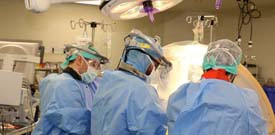
Surgery
Surgery is rarely used to treat JRA early in the course of the disease. However surgery can be used to:
- relieve pain
- release joint contractures
- replace a damaged joint
If surgery is necessary your doctor may consider joint replacement or soft tissue release as treatment.
Joint replacement
In joint replacement surgery a child's entire joint is replaced with an artificial joint. This procedure is used mainly in older children whose growth is complete and whose joints are badly damaged by arthritis. This operation is usually used to replace the hip knee or jaw joints. It can reduce pain and improve function.
Soft tissue release
Soft tissue release may sometimes be used to improve the position of a joint which has been pulled out of line by a contracture--a condition caused by a tightening and shortening of the tendons. In this operation the surgeon cuts and repairs the tight tissues which caused the contracture allowing the joint to return to a normal position.
Splints or braces
Splints are used to keep joints in the correct position and to relieve pain. If a joint is becoming deformed (bent in the wrong position) a splint may be used to stretch that joint gradually back to its normal position. Commonly used splints include knee extension splints wrist extension splints and ring splints for the fingers.
An occupational or physical therapist usually makes the splint. Arm and hand splints are made from plastic; leg splints are sometimes made of cast material. A splint is custom-made for your child. The therapist will adjust the splint as your child grows or as the joint position changes.
Splints are usually worn only at night while sleeping to keep the joint extended.
It is important for your child to move and use her joints during the day. At times however your child may also wear a different kind of splint a functional splint (often called an orthosis or brace) during the daytime.
Long-term management
Dental care
The most important aspect of dental care for everyone is the prevention of dental disease. Some children with JRA may have difficulty brushing and flossing. Your dentist may suggest various toothbrush handles electric toothbrushes floss holders toothpicks and rinses that will help your child maintain healthy teeth and gums.
Always inform your dentist about the status of your child's disease and the medications she is taking. Both the JRA and the medications used to treat it may affect the child's oral health and development. The dentist will also consider these when he is planning any treatment. These considerations may be especially important if general anesthesia sedation or oral surgery are being planned. Older children who have had joint replacements may require an antibiotic before dental treatment.
The joint in front of the ears where the lower jaw connects to the base of the skull is called the temporomandibular joint (TMJ). Arthritis may affect this joint in the same way it does others by causing pain stiffness and altered growth. Jaw exercises and heat-cold therapy may be recommended for the pain and stiffness. If the lower jaw does not develop properly the child with JRA may develop a severe overbite. Your child's dentist may recommend an early consultation with an orthodontist if this occurs. Surgery is also sometimes necessary for this condition.
A child with JRA especially if she is in a flare may not always have the stamina for even routine dental work. If possible shorter appointments may be helpful. Also schedule an appointment at the time of day your child has the most stamina.
Eye care
An eye inflammation called iridocyclitis or closely-related forms called anterior uveitis and iritis are sometimes associated with JRA especially the pauciarticular type. Iridocyclitis occurs more often in young girls with pauciarticular JRA whose blood contains a kind of protein known as an Antinuclear Antibody (ANA). In iridocyclitis certain tissues in the eyes become inflamed. But this inflammation may not cause any obvious eye symptoms until it has gone on for a long time. The symptoms of iridocyclitis which might appear after a while include red eyes eye pain and failing vision.
It is important for all children with JRA to have their eyes checked by an ophthalmologist (an eye doctor who is an M.D.) as soon as they are diagnosed. The ophthalmologist can detect the problem early and start treatment to avoid any serious problems.
Children should continue to get periodic eye exams even when the arthritis is inactive and they have no joint swelling because iridocyclitis may still be present.
Your child should visit the ophthalmologist for a complete medical eye evaluation including a slit lamp test. This is a simple and painless procedure that can spot problems before you can tell anything is wrong. The eye examination may need to be repeated from time to time depending on your child's risk for developing the eye problem. Your doctor will tell you how often your child should be examined. If iridocyclitis is found early and treated properly it is unlikely to cause any trouble. If it is allowed to go on it can result in impaired vision or even blindness.
If your child has iridocyclitis eye drops will be prescribed. One type of eye drops is used to dilate the pupil (make the black spot in the center of the eye bigger). This will keep scars from forming on the pupil. Another kind of eye drop contains a corticosteroid drug which will decrease the inflammation in the eye tissues. When corticosteroids are taken in this form the side effects are not as serious as when the drug is taken by mouth. If the drops cannot control the iridocyclitis your child may need to take an anti-inflammatory medication in pill form.
Morning stiffness relief
Many children experience a period of stiffness upon getting up each day. Morning stiffness can be one of the best measures of disease activity; the longer the morning stiffness lasts the more active the disease. Morning stiffness can be relieved by these methods:
- a hot bath or shower
- sleeping in a sleeping bag
- range of motion exercises
- a paraffin bath in a tub of warmed wax which coats the small joints of the hands)
- a cold pack: though most children do better with warmth there are a few who respond to cold (a plastic bag filled with ice or frozen vegetables works well)
Strategies for coping
Your child may feel angry or sad about having arthritis.
But be aware that you as parents siblings and other family members may also have troubling feelings about the disease and its effect on the family. However acceptance and settling into a routine will benefit everyone in the family.
When you are first told your child has arthritis you might feel shocked numbed or disbelieving. You might also feel guilty and ask yourself if something you did or didn't do caused your child's arthritis. While these thoughts are common to all parents whose children are ill work hard to put such thinking into perspective. Remember: you are not the reason for your child's arthritis.
The child with arthritis may feel many different emotions. Children can feel "hurt" by an illness that isn't their fault blame parents for the illness adopt a "why me?" attitude engage in self-pity or become angry because of restrictions on activities. They may also resent other children who are well including brothers and sisters.
Other children in the family may feel left out and resentful because of the amount of time and attention the child with arthritis requires. Or they may feel guilty as if their normal "bad thoughts" towards their brother or sister had somehow caused the illness.
Children may over-identify with the brother or sister with special needs. Some feel a pressure to achieve or make up for what their brother or sister can no longer do. Others want to involve themselves in care giving--to the point where they give up their own normal activities. In these cases try to help siblings find other ways to deal with their feelings. Whenever possible let brothers and sisters settle their own differences. Encourage siblings to talk with peers who live in homes with similar concerns. The key to dealing with all these emotions is to talk about them with one another.
Talk to your child's brothers and sisters about arthritis--let them express their feelings about the disease. Encourage the family to treat the child with JRA as they did before she became ill--but at the same time do remember that she will need some special attention.
Talk to your child about how she feels about the illness. Allow your child to express her anger about arthritis from time to time.
Encourage your child to develop her special talents.
Expect your child to behave as well as other children--do not give her special privileges like avoiding light household chores that she is physically able to do just because she has arthritis.
Encourage your child to learn as much as she can about arthritis and about her treatment program. Older children can be responsible for taking medications on time reporting any medication side effects to you and following an exercise program. Prepare them for the change to adult health-care.
Remember: Your attitude toward arthritis will affect the way your child feels about arthritis.
Try not to overprotect your child. Your child might become too dependent if you do everything for her or if you keep her from tasks which she is capable of doing. Don't be manipulated into allowing activities that shouldn't be done but compromise when you can. Being as consistent as possible will help your child learn what is expected. Plan special time to spend alone with your spouse or with the entire family. When your child first becomes ill you may set aside relationships with other family members. It is important however to continue to talk and spend time with all family members.
The child with arthritis may develop emotional or behavioral problems that you cannot deal with alone. Other family members may feel overwhelmed. Fortunately help is available.
Education
Children with arthritis should nearly always attend a regular school. They should not be isolated from other children of the same age. But because of JRA your child may need some special materials and services to help her get along in a regular school.
It is important to educate your child's teachers the school nurse and the principal about arthritis and its effects on your child. In general teachers are cooperative and understanding about JRA. In a few cases it may be necessary to ask your child's physician or a member of her health-care team to intervene.
Federal laws which give your child rights by barring discrimination against children with disabilities in public schools and requiring private schools to be accessible include:
- Section 504 of The Rehabilitation Act of 1973. It bans discrimination against disabled persons in programs that receive federal funds.
- Public Law 101-476-The Individuals with Disabilities Education Act (IDEA) formerly the Education for All Handicapped Children Act PL 94-142. It says that every child has a right to a free appropriate public education whether or not the child has a disability.
- Part H of the IDEA Act. It provides money to states to identify infants and toddlers with developmental disabilities and to offer them and their families early intervention services until they reach the age of three.
- The Americans With Disabilities Act. It requires private schools daycare centers and nurseries to be accessible to children with disabilities and bans discrimination in hiring and employment.
For more information on these laws contact the Special Education Director in your state's Department of Education.
Asking for help
Many Arthritis Foundation chapters and some pediatric rheumatology centers have AJAO family support groups that provide resources avenues for sharing ideas and feelings and a place to meet and learn from other families who truly understand what your child is experiencing. If emotional stress becomes too great it may be helpful to seek professional counseling. The doctor nurse or medical social worker may be able to help you or may be able to refer you to other sources of help. AJAO National Family Conferences held each year in a different region of the country give parents the opportunity to meet others and to learn from experts about many aspects of managing JRA while children enjoy special activities. Regional juvenile arthritis conferences may also be offered by local chapters.
Condition research
There is a great deal of research going on to find out what causes arthritis. Once this is known it may be possible to cure this illness or to prevent it from starting.
Credits
Some of this material may also be available in an Arthritis Foundation brochure. Contact the Washington/Alaska Chapter Helpline: (800) 542-0295. If dialing from outside of WA and AK contact the National Helpline: (800) 283-7800.
Adapted from the pamphlet originally prepared for the Arthritis Foundation by Michael L. Miller M.D.; Andrew P. Tanchyk DMD; Andrea Kovalesky RN; Carol Henderson RD LD; Peggy Richey; Bethany DeNardo PT MP; and James E. May MA ME.d. This material is protected by copyright. |